EN
EN 
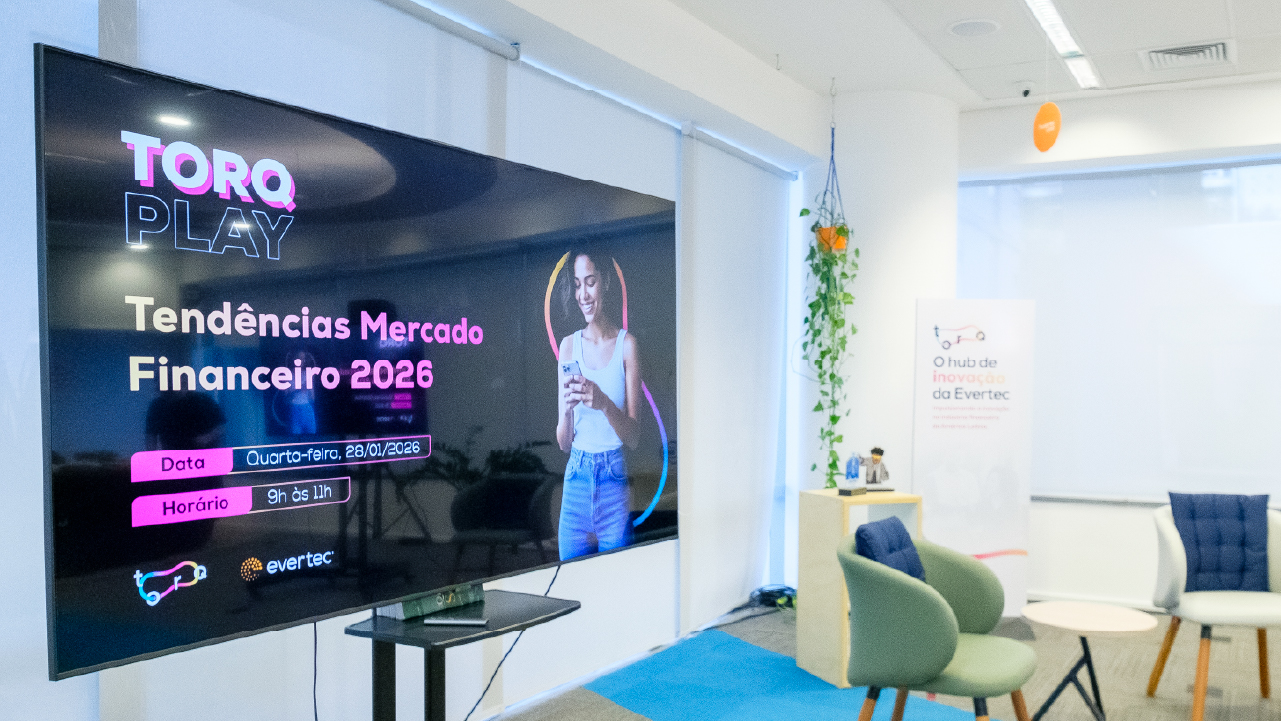


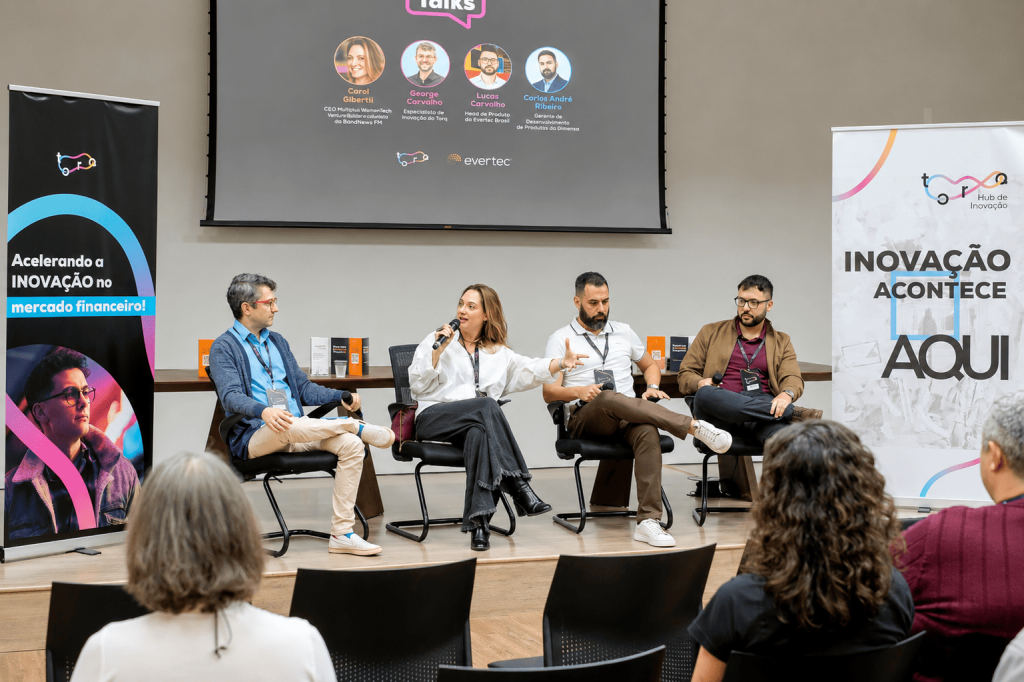
Torq Play 2026 brought together leaders from the financial ecosystem to discuss the key drivers that will shape the sector throughout the year: from the responsible adoption of artificial intelligence to the maturity of Pix across customer and business journeys.
The event, promoted by Torq, Evertec’s innovation hub, took place on January 28 in São Paulo and was broadcast live on YouTube. More than anticipating trends, the meeting reinforced a key message: 2026 will not be about experimenting for the sake of experimenting, but about scale, efficiency, and measurable impact.
What became clear at Torq Play 2026?
AI and open innovation only generate value when the foundation is well structured. Reliable data, clear governance, and well-defined business objectives were the common thread in discussions, both on AI-driven personalization and on the evolution of Pix in the daily lives of consumers and businesses.
And the experts’ message was straightforward: technology without strategy is cost; technology with governance becomes a competitive advantage.
AI with results starts with governance
In the panel moderated by Katia Sala, Corporate Communications Manager at Evertec Brazil, Myle Pontes (CEO of BeOrange) and Gabriela Bassoli (Head of Acceleration and partner at Darwin Startups) highlighted that the convergence between open innovation and AI has moved beyond discourse and now requires disciplined execution.
“Technology without policy and without governance is cost. With governance, it becomes a differentiator,” said Myle Pontes, arguing that clear policies must be created alongside AI-based solutions — not afterward.
Gabriela Bassoli reinforced the role of open innovation as a bridge between different operational rhythms. “A corporation moves like a ship. A startup is a jet ski,” she summarized, stressing that cultural alignment, clear expectations, and shared goals are essential for partnerships to generate learning and results rather than bureaucracy.
The panelists also emphasized that use cases focused on personalization, operational efficiency, and incremental gains remain the fastest paths to capturing value from AI. In this context, Brazil’s experience with digital solutions such as Pix positions the country as an international reference in large-scale technology adoption.
“Consumers are looking for increasingly specific solutions. With data and AI, it is possible to better understand how people consume, decide, and relate to brands,” said Myle, advocating for clear metrics and progressive delivery as a strategy for applying AI to business.
Pix evolves with less friction and broader reach
In the panel dedicated to payment methods, the consensus was clear: there is no “Pix 2.0.” What exists is a continuous evolution path, with gradual improvements that reduce friction, expand usage, and strengthen the ecosystem. Highlights include Tap-to-Pay Pix, Pix Automatic, and discussions around Pix Installments, which is on the Central Bank’s radar.
The overall view is one of complementarity, not substitution. Pix coexists with cards, boletos, and other payment methods, expanding coverage and efficiency across financial journeys.
Fernando Campos, Business Development at Evertec Brazil, compared this trajectory to the evolution of credit cards. “Pix will continue to incorporate new features over time, just as happened with cards,” he said.
Reinaldo Alkimim, Product Manager at Evertec Brazil, emphasized the direct impact on user experience: “Tap-to-Pay Pix reduces friction at the start of the payment process, bringing the journey closer to what users already know from tapping a card.”
Pix Automatic also reinforces the payer’s protagonism. “It is possible to set limits, ensuring that any amount above that will not be automatically debited,” he explained. For receivers, this feature democratizes automatic debit, making it accessible to small businesses such as gyms, schools, and condominiums — a relevant advance for financial and digital inclusion.
For Fernando, the impact goes beyond efficiency, as Pix has expanded access to the formal financial system, with direct effects on economic and social development.
The message for 2026
The overarching message of Torq Play 2026 was unequivocal: 2026 will be the year to turn selectivity into scale.
This means:
- Prioritizing AI use cases with measurable ROI;
- Building complete payment journeys by integrating Pix, cards, boletos, and banking services;
- Operating with governed data, security, and a focus on user experience.
In practice, the challenge lies in combining well-structured partnerships, modular architectures, and integrated teams capable of keeping pace with both the regulatory agenda and the new waves of Pix and applied AI.
Scaling AI and payments is not about doing everything: it is about choosing wisely, measuring impact quickly, and adjusting with agility.
The takeaway for the financial industry in 2026: less hype, more delivery.
Full session
The complete recording of Torq Play – Financial Market Trends for 2026 is available on the Evertec Brazil YouTube channel.